
Starting an Integrated ATPL does not simply mean starting to fly. The first weeks are about building the foundations for everything that follows: new study routines, aviation knowledge, discipline and a progressively more professional way of understanding each flight.
You are not expected to arrive knowing how to fly. But you do need to be ready to learn much more than how to handle an aircraft.
“Study. Flying is not just about handling the aircraft.”
Rodrigo González Álvarez CFI – Flight School · Aerodynamics Academy
Rodrigo González Álvarez shared that message while welcoming the two new Integrated ATPL classes that have just started their training at Aerodynamics Academy.
It sums up an important part of these first weeks. Before many of the tasks that feel unfamiliar today become routine, students need to start understanding what they are doing, why they are doing it and how each piece of knowledge fits into an operation.
What actually happens when an Integrated ATPL starts?
The first few days are partly about adapting.
There are new schedules, instructors, classmates, procedures and terminology that gradually become part of everyday life. The way students study also changes. Training is no longer centred around one subject at a time, but around different areas of knowledge that progressively begin to connect.
In an Integrated ATPL programme, that progression forms part of a single training pathway designed from the outset for students pursuing a professional pilot career.
No one needs to understand everything during the first week. What matters is beginning to build a strong enough foundation for the concepts that come later to make sense.
Key point
The first weeks are not about arriving already knowing how to fly. They are about beginning to develop the knowledge, habits and judgement that students will need throughout their training.
Do you need aviation knowledge before you start?
You do not need previous flight experience or a PPL before starting an Integrated ATPL.
One of the characteristics of the integrated route is precisely that students can begin professional pilot training from zero experience within one continuous programme.
That does not mean everyone experiences the first few weeks in exactly the same way. Some students arrive after years of reading about aviation, using flight simulators at home or becoming familiar with aviation terminology. For others, many of the subjects are completely new.
The training needs to allow both to build the foundations they will need as they progress.
What does help from day one?
Certain habits are particularly useful: establishing a routine, asking questions when something is unclear, preparing for lessons, organising your time and avoiding a build-up of unfinished study.
It also helps to understand from the beginning that learning to fly is not only about developing manual flying skills.
Students also need to learn how to interpret information, plan ahead, anticipate situations, make decisions and understand the consequences of those decisions.
Learning to fly also means learning how to study
When people think about pilot training, the aircraft is usually the most visible part.
But behind every flight there is a considerable amount of work that takes place on the ground.
Meteorology, navigation, performance, principles of flight, aircraft systems, human performance and operational procedures gradually provide answers to questions that later appear in practice.
How does temperature affect aircraft performance? What weather information do you need before departure? How will the wind affect a navigation exercise? Which aircraft limitations need to be considered? How is a flight prepared?
These are not separate academic subjects that simply need to be passed before reaching the aircraft. They are areas of knowledge that gradually become part of how a pilot prepares for and understands an operation.
In our guide to PPL and ATPL theory, we look more closely at what pilots study before flying and how the level of theoretical training changes between private and professional pathways.
Is starting ATPL training difficult?
It is demanding training, although perhaps not for the reason someone might imagine before starting.
During the first weeks, part of the challenge is becoming comfortable with the volume of information, connecting different subjects and finding a working rhythm that can be maintained over time.
Not everything is understood immediately. And not everything has an obvious practical application at first.
Concepts that initially seem highly theoretical begin to make more sense when they later appear during planning, a briefing, simulator training or an actual flight.
Consistency matters more than last-minute study
A long training programme cannot realistically be approached as a series of intensive study sessions immediately before each exam.
Knowledge builds over time. What is learned during one stage provides a foundation for understanding the next, while subjects that initially appear separate increasingly begin to connect.
That is why maintaining a consistent routine is generally more useful than concentrating a large amount of study into the days immediately before an exam.
The objective is not simply to remember an answer. It is to understand a concept well enough to recognise it when the context changes and apply it when necessary.
Why your classmates are also part of the process
An Integrated ATPL is also a training journey completed alongside other people.
For many months, students share classes, preparation, exercises, examinations and many of the experiences that come with the different stages of the programme.
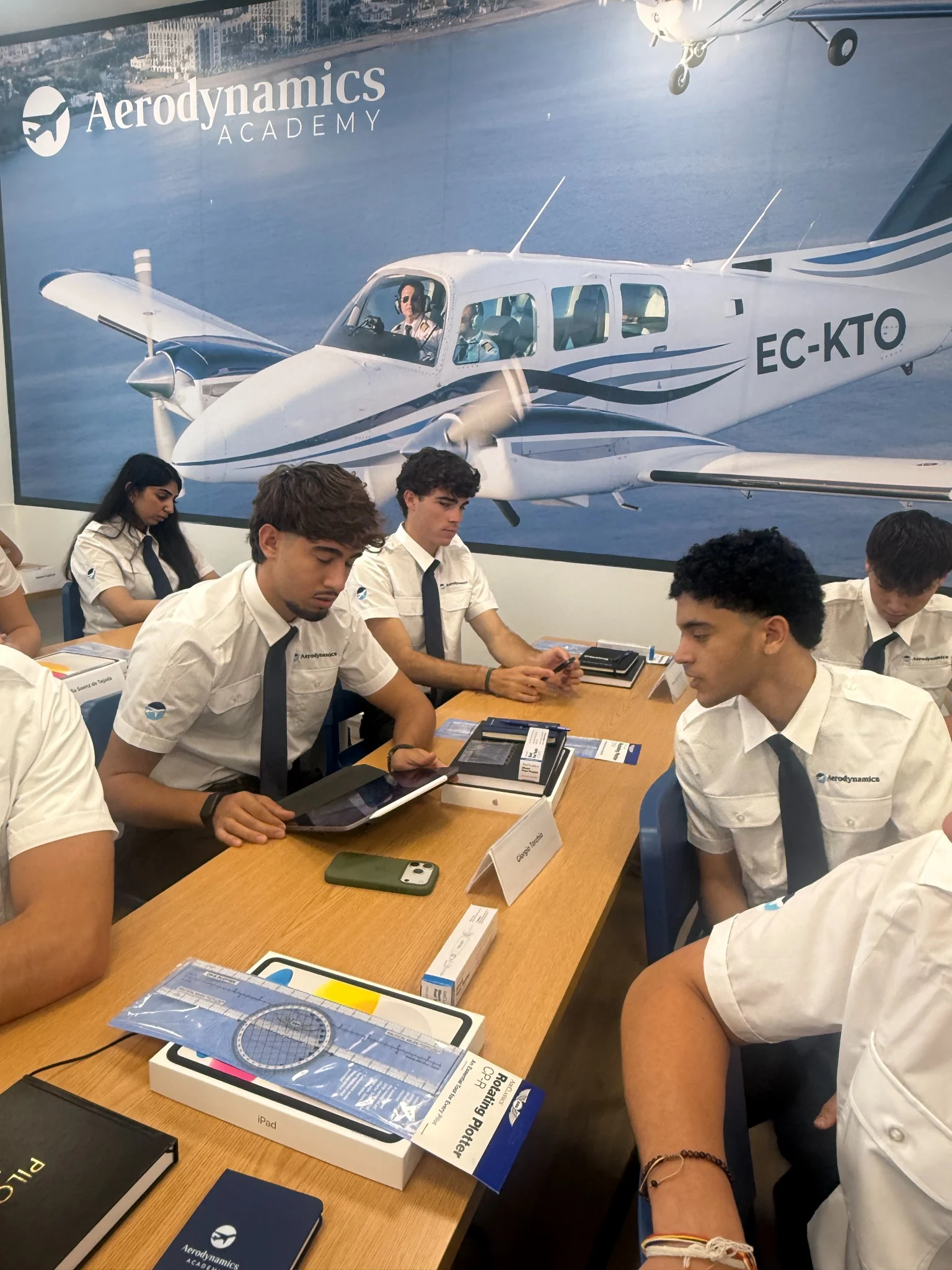
That does not replace individual work. Every student progresses individually and remains responsible for their own preparation.
But studying alongside others makes it possible to compare questions, explain a concept, prepare for a session or simply realise that a difficulty that felt individual is also part of someone else’s learning process.
For the two classes that have just started, that community begins now. A few months from today, much of the terminology, procedures and routines that currently feel new will simply be part of everyday training.
When do theory, simulator training and flying begin to connect?
There is no single point at which theory ends and the “real” part of pilot training begins.
The connection develops progressively.
A concept introduced in the classroom may later appear while preparing for a flight. A decision made in the aircraft may then be analysed during a debriefing. Simulator sessions allow students to work on particular procedures and situations within another part of their training.
As the programme progresses, those connections become increasingly clear.
That is why reducing pilot training to the number of hours spent at the controls gives an incomplete picture. Flying is an essential part of the programme, but every flight also involves preparation, knowledge, decision-making and analysis afterwards.
If you want to see in more detail how the different stages develop, Inside an Integrated ATPL Journey explores how some of these elements fit into the wider training pathway.
Two new classes are now beginning that journey
This week, two new classes began their Integrated ATPL training at Aerodynamics Academy.
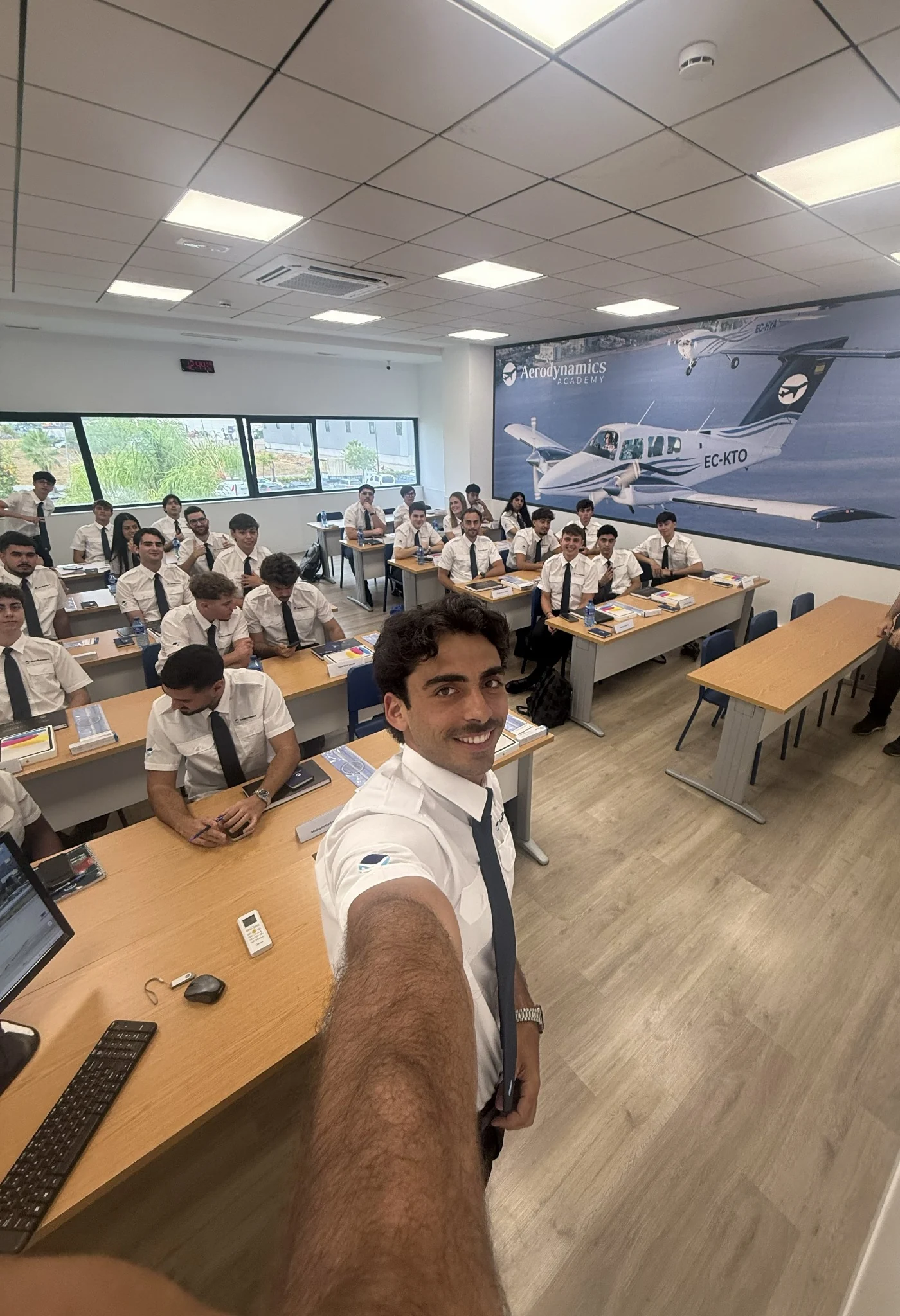
The first day is an opportunity to meet classmates, become familiar with the school and, inevitably, take a few group photographs. But the important part begins afterwards.
What follows is a long training journey involving theory, flying, simulator sessions, examinations, individual preparation, briefings, debriefings and many hours of work that will never appear in those photographs.
The Classic Integrated ATPL programme at Aerodynamics Academy has an estimated duration of approximately 19 months. This is an estimate rather than an identical timetable for every student: progress can be affected by factors inherent to flight training, including individual progression, the scheduling of different training phases, official examinations and weather conditions.
If you are still at the stage of deciding whether to begin, our guide to five questions before starting Integrated ATPL training in Spain covers duration, course format, English requirements, financing and medical certification in more detail.
The first day is only the beginning
A few weeks from now, many of the things that require deliberate attention today will already feel familiar.
Then new subjects, new stages and new challenges will follow.
That is the purpose of progressive training: not to expect someone to arrive already knowing how to do the work of a pilot, but to build the knowledge, skills and judgement required to progress, one stage at a time.
That is why Rodrigo’s advice to the students beginning their training was simple, but important: study.
Because learning to fly has never been only about learning how to handle an aircraft.